
Why is sleep important in our pets with chronic pain?
We all know how important sleep is in our own lives, for our physical and mental wellbeing. The same is of course true for our pets. But why is it so crucial?
When I attended the Veterinary Arthritis Alliance (VOA) Conference earlier this year I met a lovely lady called Lauren Davies, aka the Sleep Vet – she is a vet who has a lot of experience in the healthcare sleep surface industry (no I didn’t know that existed either!) and her talk had a lot of good sense in it.
I think her message about including sleep considerations in our patients’ welfare is really crucial and I’d like to share some of her wisdom with you here. Let’s take a trip into the science of sleep.

The Sleep Cycle
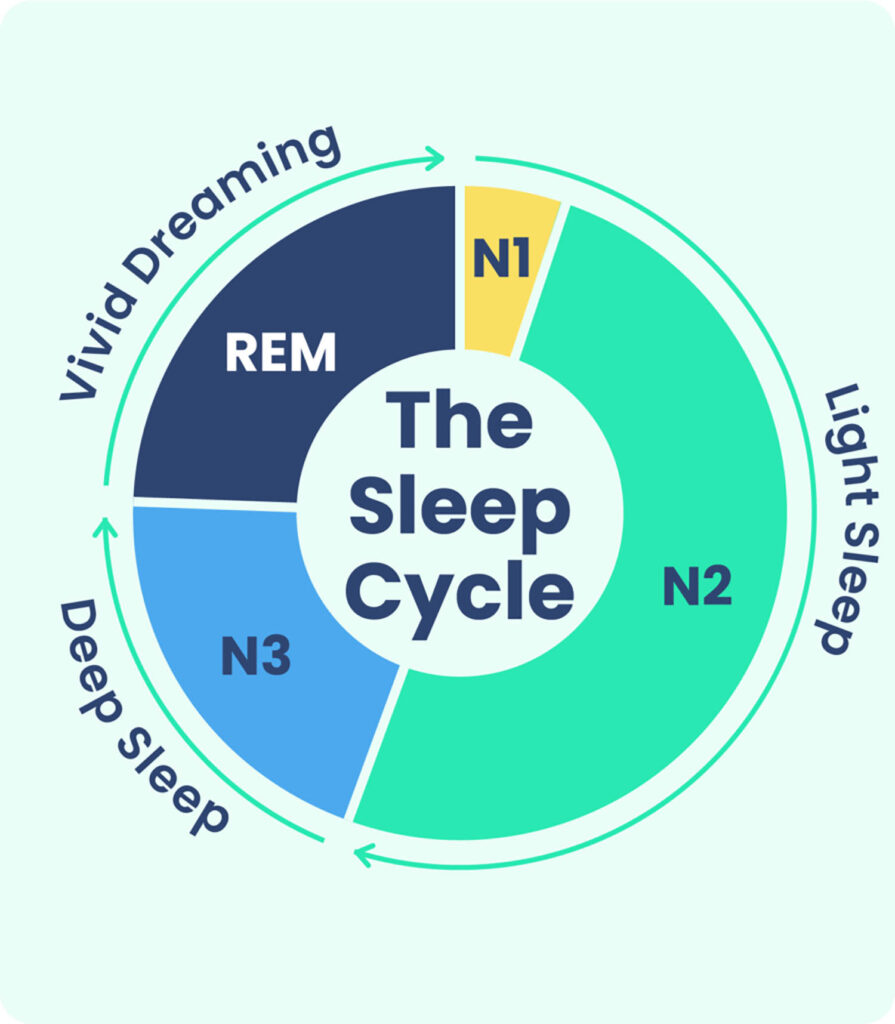
Sleep in mammals consists of 4 phases:
- N1:(drifting off)
- N2 (light sleep)
- N3 (deep sleep)
- REM (rapid eye movement/dream sleep).
We cycle through these stages throughout our sleep – in humans this cycle lasts around 45 minutes, in dogs around 20 minutes. Often there is a transient waking before we drift off again. We can also move from REM to N2 or N3 and back again but we must go through all N1-N3 to reach the REM stage, there’s no shortcut. This is important because if our sleep is interrupted before we reach the REM stage, we lose it and have to start at the beginning again.
Neuroscientists have established for years that deep sleep is the stage when physical repair/healing take place, and REM sleep is when emotional regulation and restoration takes place. We often talk of dreams reflecting our concerns during the day, this is when our brains can sort through all the emotional ups and downs of life and sift out the important from the less important. How often do we hear the advice ‘just sleep on it’ before making a major decision? Studies have shown that if we have had a stressful day, this can prolong the REM phase, and also if we have had more REM sleep the previous night we are more likely to feel resilient in the face of challenges during the day. Adequate REM sleep is essential for good learning and memory function.
Conversely those who have experienced interrupted sleep (eg while travelling or having a young baby) will know all too well that if we are not able to complete those sleep cycles and get sufficient REM sleep that our emotional health suffers; we can feel frazzled, short tempered and experience ‘brain fog’, our reactions are slower and we can find it hard to make complex decisions. This is why there are strict regulations about rest stops for pilots and long distance drivers. Also, there are strong bidirectional links between sleep deprivation and conditions such as anxiety and depression.
Sleep in our pets
Wild dogs typically nap in chunks throughout the day, but our domestic dogs have developed a sleep routine to fit in with our own, usually sleeping around 6-8 hours at night and then having one or two naps during the day. Puppies need around 20 hours of sleep a day – this can be difficult to achieve if they are with their owners at home all day (1).
There is growing evidence that the current generation of pets, particularly ‘pandemic puppies’ who were acquired during the lockdowns and working from home boom, have had chronic sleep deprivation and disturbance and that this might account for the growing prevalence of ‘problem’ behaviours – separation anxiety, resource guarding, aggression (2). These behaviours are all an outward sign that a dog is not coping well emotionally.
So what about our pets with chronic pain such as osteoarthritis?
Well; those who have read my blogs before will know that there is a strong relationship between emotional health and chronic pain. An anxious pet (or person) is likely to feel a higher threat level from any environmental challenge or stimulus, in other words, they are likely to perceive their pain as more threatening than an animal who is feeling emotionally secure, and thus experience it as a ‘worse’ pain. Increased pain levels, mean higher alert levels for self defence, mean more easily disturbed during rest, poorer quality sleep, and yes, that leads to more anxiety, and more pain. Studies on burns patients in hospital, who were sleeping in wards and subjected to multiple disturbances for checks for themselves or fellow patients, experienced a higher level of pain than those in individual cubicles with less disturbance.
This leads to the inevitable conclusion that yet another strand in the complex web of pain management is sleep management and sleep protection. This has led to me adding sleep considerations to my Recover pain management programme, including a recognised sleep questionnaire and advice along the following lines:
1: Know your pet’s sleep needs and respect them
10-12 hours for an adult dog is typical. Cats want to sleep most of the day and be active at night.
A pet in pain may spend a lot longer than this in bed but their sleep may be poor quality. Ensuring their pain medications and therapies are the best they can be is important for improving sleep quality, which in turn will improve their pain management.
Don’t disturb your pet when they are sleeping unless it is unavoidable.
2: Ensure your pet feels safe in their sleep area
We know that if we are worried about something, it is more difficult to fall asleep and stay asleep. Anxiety is the extreme end of this and can lead to chronic insomnia (I can vouch for this :/) So your pet needs to know that they are safe where they choose to sleep.
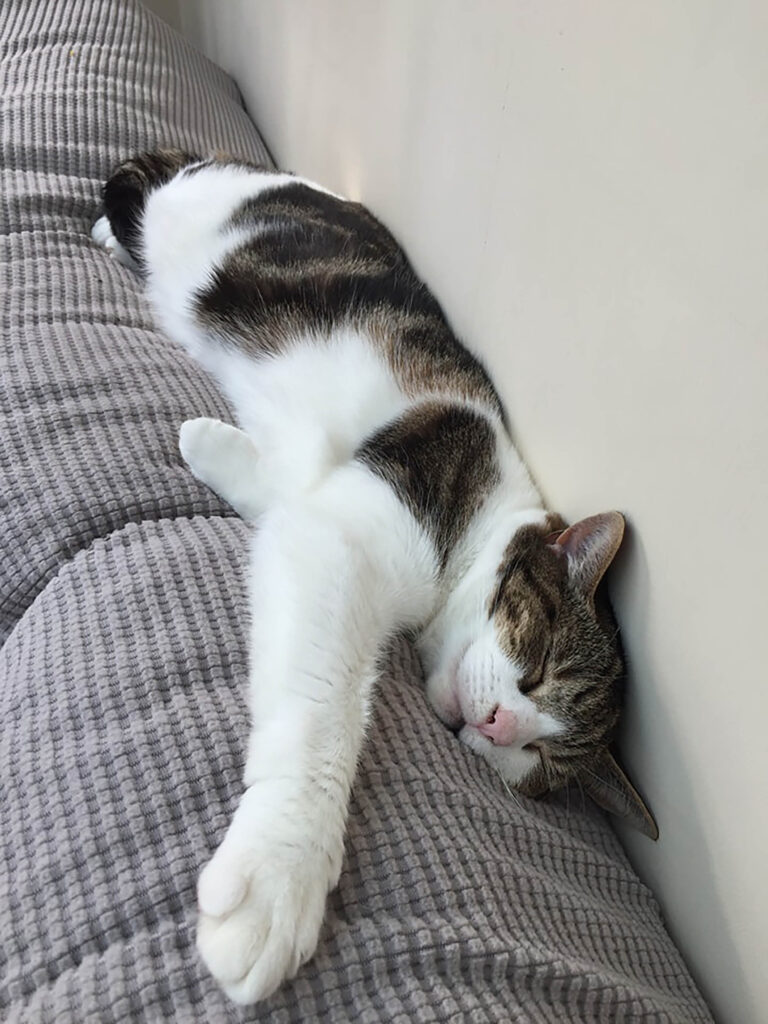
Many cats prefer a high ledge out of the way of family life.
Don’t place a dog bed in the centre of a busy kitchen or hallway.
Don’t allow children to approach them in their bed or sleep area, even when they are awake. Treat it as their ‘safe space’ where they can retreat to should they choose.

3. Provide a supportive sleep surface
Have you ever had to sleep on a blow-up mattress, or a hard floor?
Have you ever had to sleep in a cot as an adult (again, I can put my hand up here!!) Did you get a good night’s sleep?
Yet many pets are given supersquishy unstable beds, which are too small or with high sides which constricts how they can position themselves. Choose a firm, supportive surface which is easily accessible (no high sides) and big enough for your pet to stretch out on should they choose.
Dr Davies’ company, www.vetrelieve.co.uk has some great examples.
So hopefully, this post will help you to look at how you support your pet with their sleep in a new way.
Maybe you can make some changes to benefit your pet’s pain management and their quality of life.
References
- https://www.vets4pets.com/pet-health-advice/dog-advice/how-much-do-puppies-sleep/
- https://www.bbc.co.uk/news/uk-england-67800895
Photo credits
Beagle sitting up – Pexel-Shot on Adobe Stock
Lurcher falling off beanbag – Tonia Kraakman on Pexels
Snapping puppy – Petra Richli on Adobe Stock